

First released in 2011, the album contains 10 selected tracks from the original 18-track cd. The songs in this album was recorded around 1996-1998 on an analog Fostex 380s 4-track cassette recorder. At this point I already have a home studio on my living room with no acoustic treatment. I had a premier drums set with sabian cymbals. I also had a good selection of mics which I experimented to get the best results. For drums I used a Fostex dynamic mic on the snare, (this came free with my purchase of the Fostex 380s Mulitracker. I used a stereo electret condenser pencil mic for the overheads which I bought cheap in raon since the store says nobody wants to buy it as it has 2 tr plugs which karaoke users are not familiar with. I used a “fifty-peso’ mic for the kick which gave me good results. The thud I achieved was probably because of the hard diaphragm of the cheap mic. You cannot get this results on expensive mics having more sensitive diaphragm.
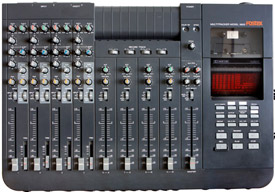
The Fostex 380s Multitracker was the heart of the recording. It featured a responsive 3 band equalizer and two effects sends on each channel strip. I did a lot of bouncing to make all my instruments fit on the mix. Drums and bass is usually bounced into one track, then guitars on another, keyboards or backing vocals on the third track and the main vocals on track 4.
There was no compression done on the drums. With the bass I used a sansamp bass DI. I made it a point that all the signals were good when recorded so that I would not do any more processing while mixing. Guitars was feed using a zoom 3030 effects pedal. The main vocal mic is an electret condenser pencil mic which I found responsive to my vocal range. As early as this time, I already knew I should be avoiding low frequencies for the vocals. The pencil mic just did that without the need for an effects. I had a half-rack Boss SE-50 which I used for hall reverbs on the vocals. In some tracks, I used a Boss DR 550mkII Drum Machine.


In 2023, I remixed all the songs as everything can now be done on a PC. I didn’t like the drum machine in the original recording so I did some redrumming using addictive trigger to make it sound more realistic. I was able to get the raw 4-tracks and split them using stem separation software RipX. So now I have the unbounced bass track separated from the drum. The new mix is now what you hear on streaming platforms. Here is the story for each song:
- Jam Groove – This instrumental piece was composed when I was playing with the drum machine. It started with a groove and a bass line which made it obviously funky having nothing else on and no vocals to reserve space for. The guitars came later and accented with some synth stabs and melodies. The song was a good introduction for the album. This was intentionally composed as a first song for the album.
- Sa ‘Yong Karanasan – This is probably one of my first attempts to tackle the subject matter of a violence victim in a song. More like an observation of a tormented soul. Trying to push for more positivity yet not forgetting the lessons you learned from experience. I was experimenting on tremolo effects on guitars with this song.
- Innosence – The intro of this song was inspired from Ella’s “Permata Pemotong Permata” (a malaysian singer) where the bass did a melodic part over accented down beats. There are three guitar solo portions in the song, each with different effects. The song is about a young innocent crush.
- Hope You Do – Composed in Tacloban city while I was on vacation. The groove of this song was created with the help of my uncle who is also a musician in a band. He actually created that bass line. I just added bass solo towards the end to make it different from the usual guitar ad libs. This started as a jam with a drum machine where I do the guitar strumming and vocals while my uncle did the bass. The song is more about realizing mistakes in a relationship and hoping they could make up.
- Tatakasan – This song is about leaving a relationship which may or may not work. I was heavily influenced by synth pads on this song.
- Give – A “We are the world” type of song. This was composed when Live Aid and all those feed-the-world thing was popular. Although it became a melancholic song, this was never my intention. Wanted it to be more of a song inciting people to help out.
- Atup – A crazy song on experimental music techniques. In a multitrack cassette player you can reverse the play of a song from end to start. Thus this song was created. This was recorded on an acoustic drums (Premier ATK). I do not intend to insult or hurt anybody with this song. It was just a play of how a song can be delivered.
- Tabi Po – A ska rhythm song that will really make you jumping and dancing. I really missed putting a horn section on this (this was fixed in the Late Reflections – Nolit covers Nolit album). The song is actually more about conceit where the singer feels more self important. He thinks a girl is running after him and he just pushes her away.
- Echoing Cries of the Silent Children – The introduction of this song is supposed to sound like teardrops rather than raindrops. Still experimenting on bass as a melodic instrument in lieu of the guitar, the bass line is more riff laden. The song is all about unborn children.
- Di Minsan Lang – Another experimental song, this time playing with tape speed. The guitar solos were actually recorded in slower speed and was speed up to create the impression of fast guitar picking. The song is about being played on by his partner in a relationship.
If you have noticed the heavier songs were not included in this album. A lot of the instrumental pieces including the filler “Oxygen” taken out to make the album more pop and appealing. Those songs are included in the “Other Reflections” which we will review next.


No comments:
Post a Comment